
Water Activity in Green Coffee
MAINTAINING GREEN COFFEE QUALITY THROUGH WATER ACTIVITY CONTROL
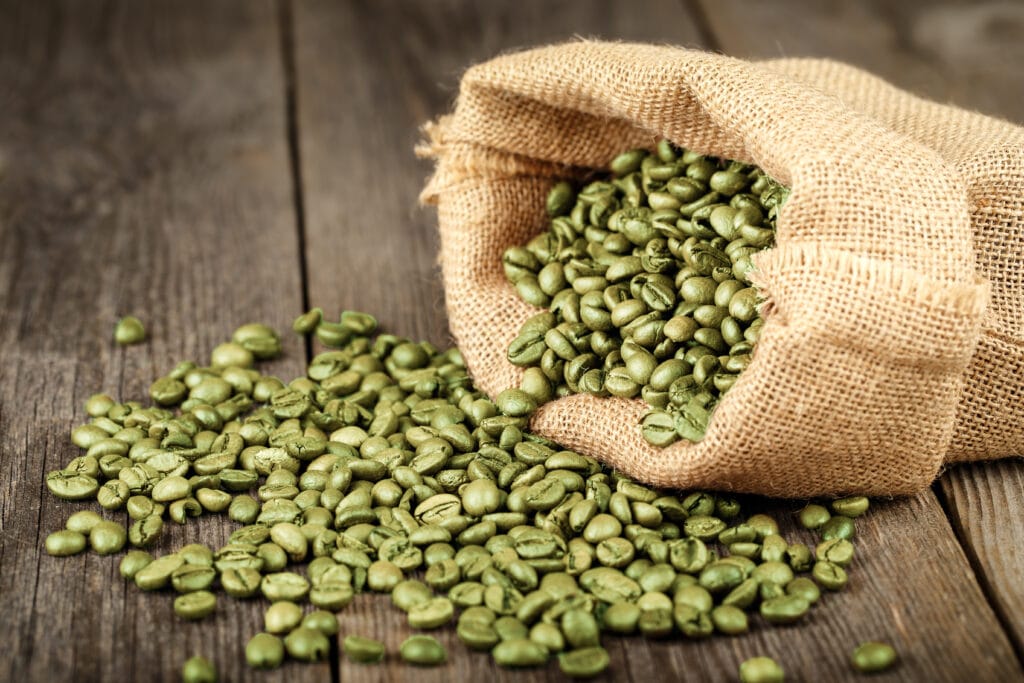
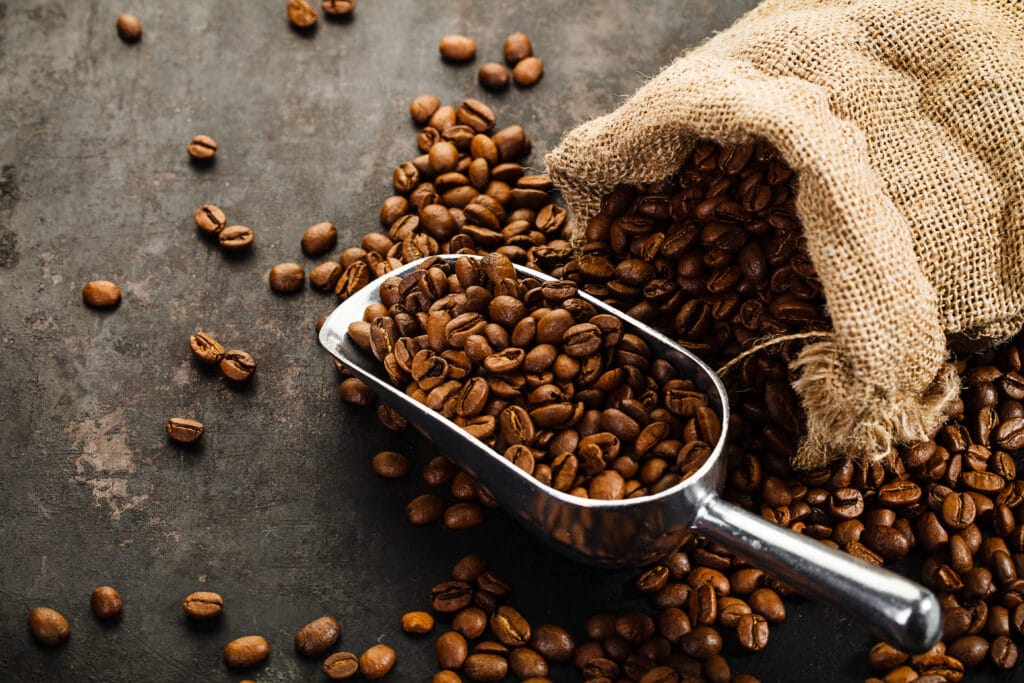
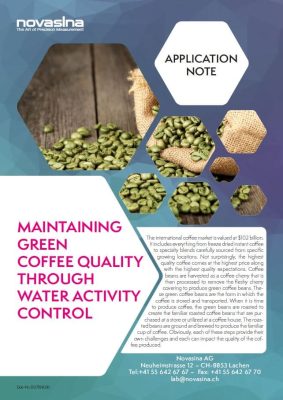
The international coffee market is valued at $102 billion. It includes everything from freeze dried instant coffee to specialty blends carefully sourced from specific growing locations. Coffee beans are harvested as a coffee cherry that is then processed to remove the fleshy cherry covering to produce green coffee beans. These green coffee beans are the form in which the coffee is stored and transported. When it is time to produce coffee, the green beans are roasted to create the familiar roasted coffee beans that are purchased at a store or utilized at a coffee house. The roasted beans are ground and brewed to produce the familiar cup of coffee. Obviously, each of these steps provide their own challenges and each can impact the quality of the coffee produced.
Coffee quality is tracked throughout processing from harvest to coffee production. Initially, quality of green beans and roasted beans is done visually based on size and appearance, which is followed by the most important quality measurement of the coffee produced, a process called cupping. This cupping process looks at flavor, aftertaste, acidity, body, and uniformity among others and gives a score between 1-100 with specialty coffees expected to score 80 or higher. Unfortunately, finding that a sourced coffee bean does not cup well may be too late as the beans have already been purchased. It would be preferrable to be able to conduct tests on the green beans themselves at the time of harvest to predict the cupping quality. Water activity has been investigated as a potential measurement on green coffee beans to predict the cupping quality of sourced coffee beans.
THEORY OF WATER ACTIVITY IN GREEN COFFEE
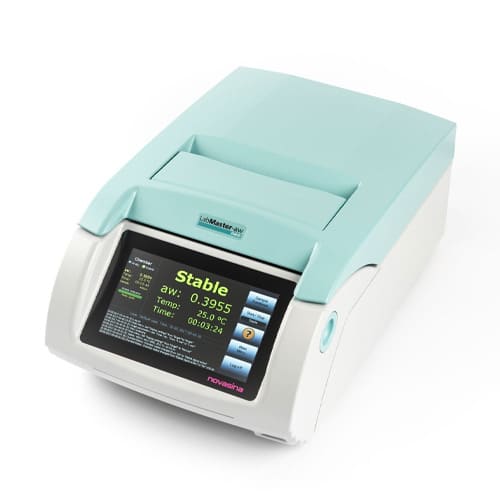
Water activity is defined as the energy status of water in a system. For green coffee, water activity is measured by equilibrating the liquid phase water in the sample with the vapor phase water in the headspace of a closed chamber and measuring the Equilibrium Relative Humidity (ERH) in the headspace using a sensor. The relative humidity can be determined using a resistive electrolytic sensor, a chilled mirror sensor, or a capacitive hygroscopic polymer sensor. Instruments from Novasina, like the Labmaster NEO, utilize an electrolytic sensor to determine the ERH inside a sealed chamber containing the sample. Changes in ERH are tracked by changes in the electrical resistance of the electrolyte sensor. The advantage of this approach is that it is very stable and resistant to inaccurate readings due to contamination, a particular weakness of the chilled mirror sensor. The resistive electrolytic sensor can achieve the highest level of accuracy and precision with no maintenance and infrequent calibration. Coffee beans can be tested whole or crushed with crushing providing advantages in testing time and repeatability.
WATER ACTIVITY AND CUPPING QUALITY IN GREEN COFFEE
The value of tracking water activity of green coffee beans is not directly in a correlation to cupping score. In other words, 2 coffee beans at the same water activity will not necessarily have the same cup score, nor will the cup score increase by a predictable amount as water activity either increases or decreases. Consequently, some studies have concluded that water activity is not useful enough to justify testing and that relying on moisture content should be sufficient. The problem with this conclusion is first, moisture content analyses are in almost all cases more difficult and much less reliable than water activity testing. Secondly, the value of water activity is not in a direct correlation to cupping score, but in providing an optimal range for storage to avoid microbial contamination, slow degradative chemical reactions, and maintain metabolic activity. The recommended optimal water activity range for stored green coffee beans is 0.45-0.55 aw. Drying and storing green coffee beans at this water activity range will not improve the cupping quality of the green coffee beans, but instead will maintain the quality for 6-8 months.
WATER ACTIVITY IN GREEN COFFEE AND MICROBIAL GROWTH
The main reason for using 0.55 aw as the upper limit for stored green coffee beans is to prevent microbial growth. Each microorganism has an ideal water activity inside their membrane and their ability to reproduce and grow depends on maintaining that water activity. Each microorganism has a unique limiting water activity below which they cannot grow.
These growth limits indicate that all pathogenic bacteria stop growing at water activities less than 0.87 while the growth of common spoilage yeasts and molds stops at 0.70 aw, which is known as the practical limit. Only xerophilic and osmophylic organisms can grow below 0.70 aw and all microbial growth stops at water activities less than 0.60. Molds and their accompanying mycotoxins would be the most likely contaminants on green coffee beans and their presence can result in musty off flavors and odors or worse, a reaction to the mycotoxins. However, at water activities less than 0.55, green coffee beans would not support the growth of any microorganisms, thereby justifying the ideal range being below 0.55 aw.
WATER ACTIVITY IN GREEN COFFEE AND CHEMICAL STABILITY
An additional reason to for maintaining green coffee beans at water activities less than 0.55 is to limit the rates of potentially harmful chemical reactions. In general, as water activity increases so do reaction rates, but lipid oxidation is unique in that the reaction rate also increases at very low water activity. Examples of reactions that can result in the degradation and end of shelf life of green coffee beans are Maillard browning (changes in color and flavor), lipid oxidation (rancidity) and staling.
Keeping the water activity of green coffee beans below 0.55 aw will slow the rate of these reactions, but they will still occur. The time required for the reaction to have progressed to the point of unacceptability at a given water activity and temperature will be the product’s shelf life. If the rate constants for these reactions at several different storage conditions are determined, a predictive model can be used to estimate the time needed for the reaction to proceed to an unacceptable level under any storage conditions.
WATER ACTIVITY IN GREEN COFFEE AND METABOLIC STABILITY
The main reason for not allowing the water activity of stored green beans to drop below 0.45 aw is to maintain the viability of the green seeds including the enzymatic activity that is critical to maintaining the expected flavor and aroma profile for a coffee. Green coffee beans at water activities less than 0.45 aw will potentially lose their viability, resulting in aged flavors when the coffee is roasted. In addition, at water activities less than 0.45, the surface of green coffee beans can potentially become more rigid and brittle, resulting in poor grinding performance in preparation for roasting.

IDEAL WATER ACTIVITY FOR GREEN COFFEE
Like most products, green coffee is sold on a weight basis, so maximizing the amount of water, the cheapest ingredient, that can be in a product while remaining safe and stable will maximize profitability. The ideal water activity range for storing green coffee beans has been identified and moving above or below this range will render the product undesirable. A green coffee with a cupping quality of 88 stored outside the ideal water activity range can experience multiple point drops in cupping score in just 1-2 months. The key then to maximizing profitability while ensuring quality is to make sure that the water activity of green coffee beans is in the 0.45-0.55 aw range.
" Water activity testing of green coffee beans is important to maintain quality. To maximize your profits and make sure that the standard of your products remain the same water activity measurement should be included in your production process."
Dr. Brady Carter world-renowned specialist in water activity
Download the full Application note here!
Water activity meters best suited for Green Coffee
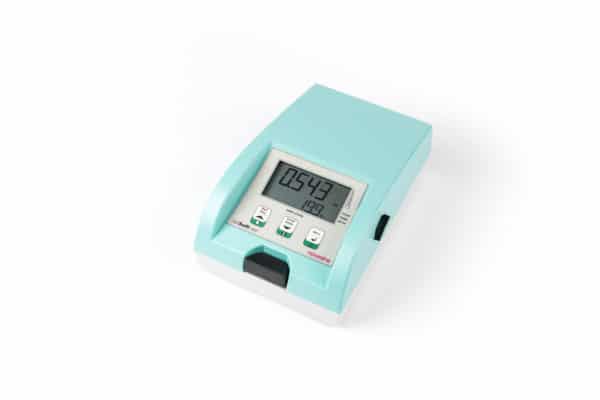
LabSwift-aw
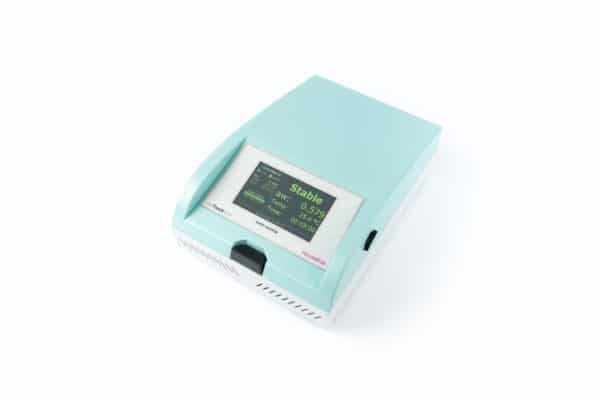
LabTouch-aw