
Continually rising energy costs are a burden for everyone and have significantly contributed to recent increases in inflation. These higher costs have particularly impacted the manufacturing industry where margins are tight. With prices constantly increasing, the only way to secure margins is through cost savings created by increased efficiency. With estimates of $113 Billion USD spent annually on energy inputs by manufacturing, reducing energy usage is a strong candidate for realizing cost savings.
In many manufacturing warehouses, to meet quality and safety requirements, climate levels are tightly specified and variation from these levels can lead to product waste or recall due to failure. Climate control of commercial buildings accounts for 19% of total energy usage, presenting a substantial cost but also an opportunity for costs savings. Let’s discuss the key elements of climate control and where it is possible to affect energy reductions.
The key to effective climate control is the strategic deployment of relative humidity and temperature (RH/T) sensors and connecting them to a central controller system. The readings from these sensors provide feedback to a programmable logic controller system to turn the HVAC system on and off. When these sensors are strategically placed throughout a manufacturing facility, they can provide critical data about microclimates and the capability of the HVAC system to eliminate spatial differences.
These large data sets collected from the sensors can ultimately be used in combination with other deployed sensors and machine learning to anticipate climate changes and allow preventative adjustments to be made before more expensive large fluctuations can occur. The important role sensors play in energy savings is reflected in the US Department of Energy identifying HVAC sensors as the highest priority among energy savings research with the potential to make a difference in energy usage.
While RH/T sensors can be beneficial in effective climate control, they can also be detrimental to energy savings if their performance is not accurate and consistent. The impact of sensor accuracy and reliability is a critical factor that has not received enough attention when considering the impact of sensors on effective HVAC control.
This is of particular importance for spaces that must be maintained to humidity levels higher than ambient such as indoor agriculture or cheese manufacturing. The cost of humidification is high while incorrect humidity control can lead to product waste, so even small deviations from the ideal humidity and temperature can be costly.
Consequently, the difference between an RH/T sensor that is accurate to 4% RH and one that is accurate to 0.4% RH could result in tens of thousands of dollars in energy savings per year from superior climate control.
We use the example of a small facility that has tolerance range of +/- 6% RH to produce a quality product and meet climatic requirements.
To effectively keep the climate controlled within that 6% range, we can assume that the accuracy of the RH sensors being used to track humidity should be a factor of 6 to 8 better than the control range to achieve effective control. That means that for a +/- 6% relative humidity tolerance, the accuracy of the RH sensors must be +/- 1% or better. Otherwise, the sensors will be continually telling the control system that it needs to activate when it doesn’t.
Each time the system is activated, the life span of each part of the HVAC system (controlling units, air humidifiers, fan filters, etc.) is reduced while energy use is increased.
These recurring costs are often not sufficiently considered as expenses as this, occur over time and not as one capital expense. However, these monthly savings can add up to over $13,000 of unnecessary expenses per year compared to next best sensors and over $23,000 compared to the worst sensors, all due to RH sensors that don’t meet the accuracy requirements for tight climatic control. These are the savings for a small area, so the savings will be even more for a larger area. With climate control using 19% of the energy, these savings will quickly pay for the initial cost of deploying high accuracy sensors and make significant contributions to reducing overhead and increasing profitability.
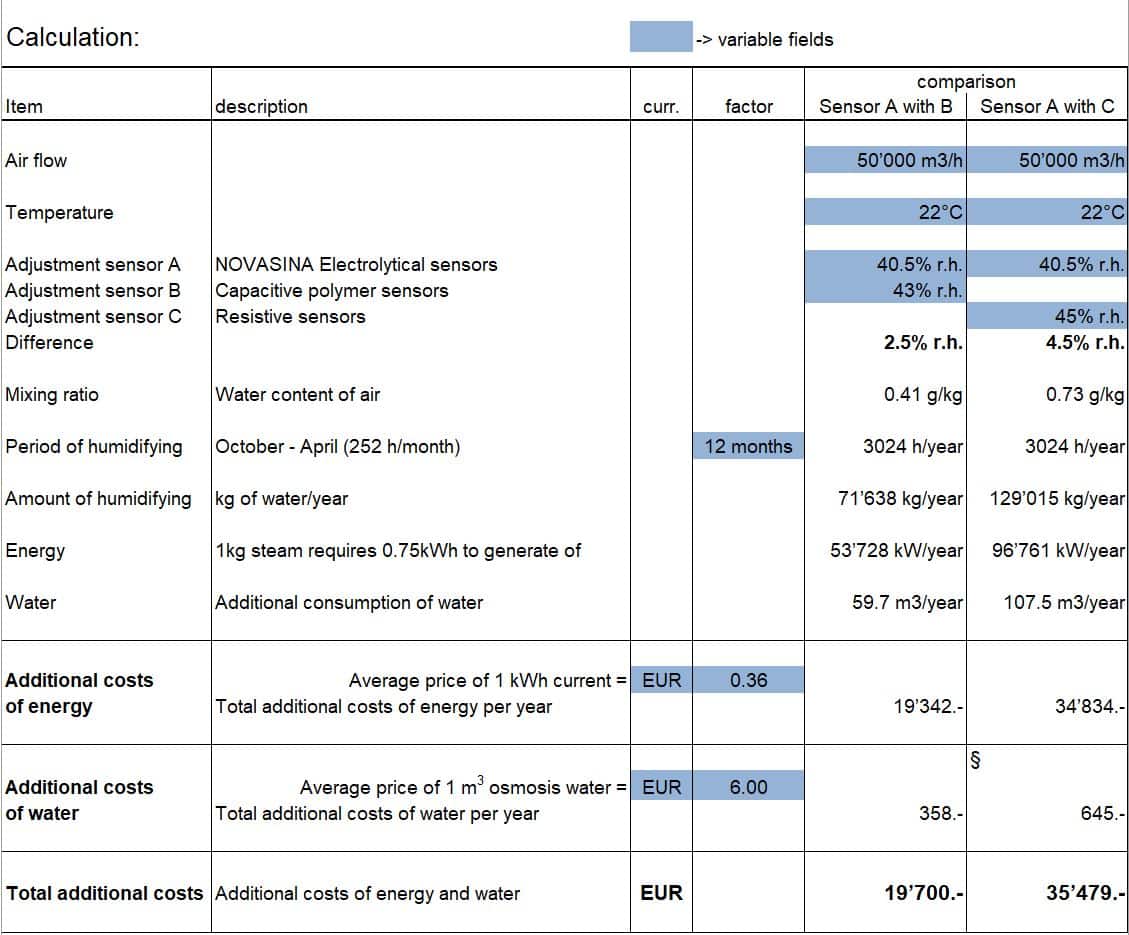
Table 1. Calculation of cost saving potential using the optimal sensor technology. Sensor A is a Novasina nSens RH sensor with +/- 0.4% accuracy, Sensor 2 is a high-quality capacitive sensor with +/- 2% accuracy and Sensor C is a low cost resistive sensor with +/- 4% accuracy.
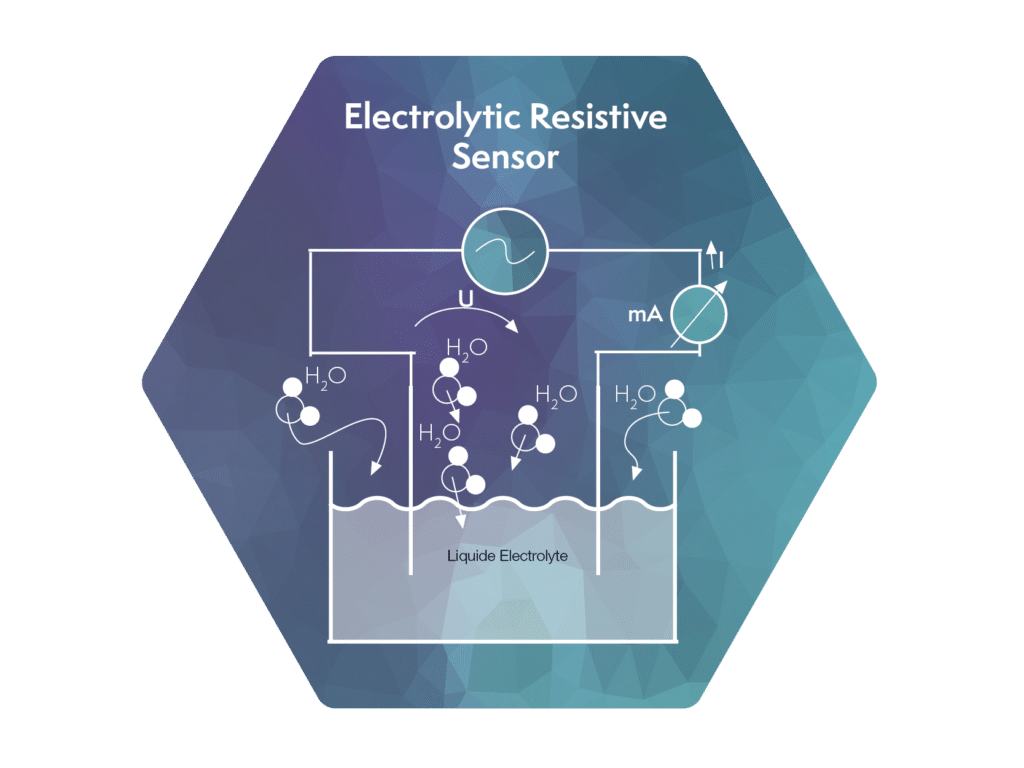
The unfortunate challenge of the example presented in the previous section is that most RH sensors do not have accuracy better than +/- 1%. That is because common RH/T sensors detect relative humidity changes by tracking the electrical conductivity of a hygroscopic polymer as the polymer equilibrates with the relative humidity conditions of its environment. While these sensors can perform adequately for certain applications, their accuracy is limited to 2% RH or worse and they all suffer from saturation and drift when exposed to high humidity or contaminants in the air. In fact, these types of sensors are never specified for accuracy or repeatability at humidity levels higher than 85% due to this known weakness. Finally, the electrical properties of the hygroscopic polymer are subject to hysteresis after multiple wetting and drying cycles, leading to a need for constant calibration adjustment.
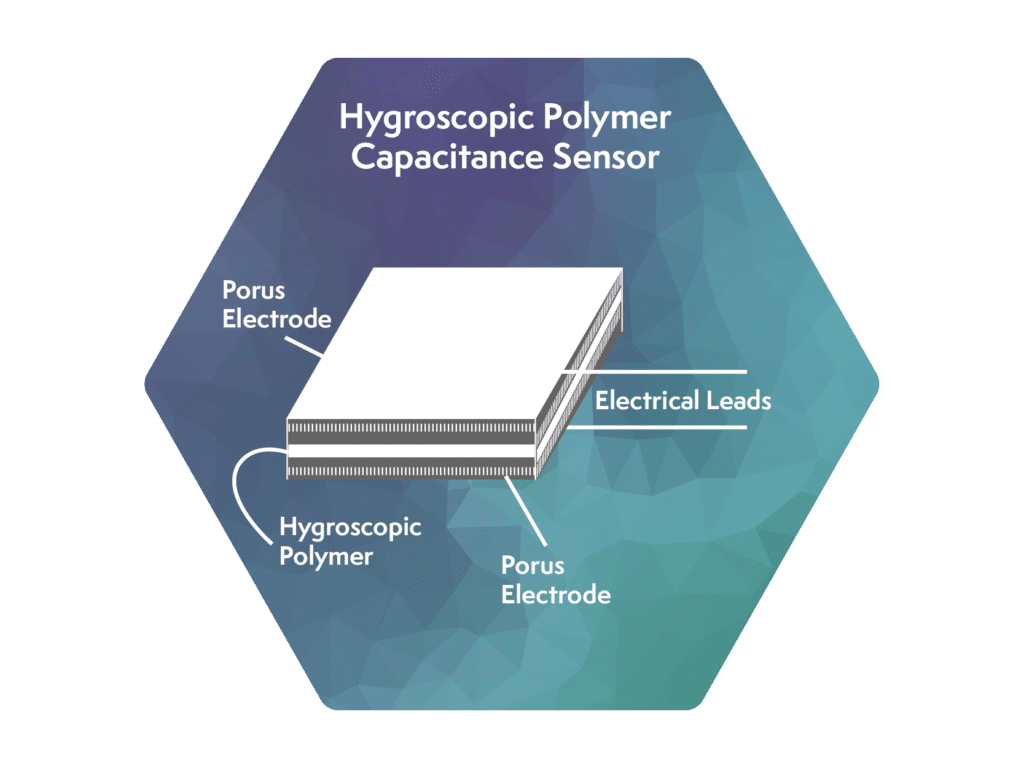
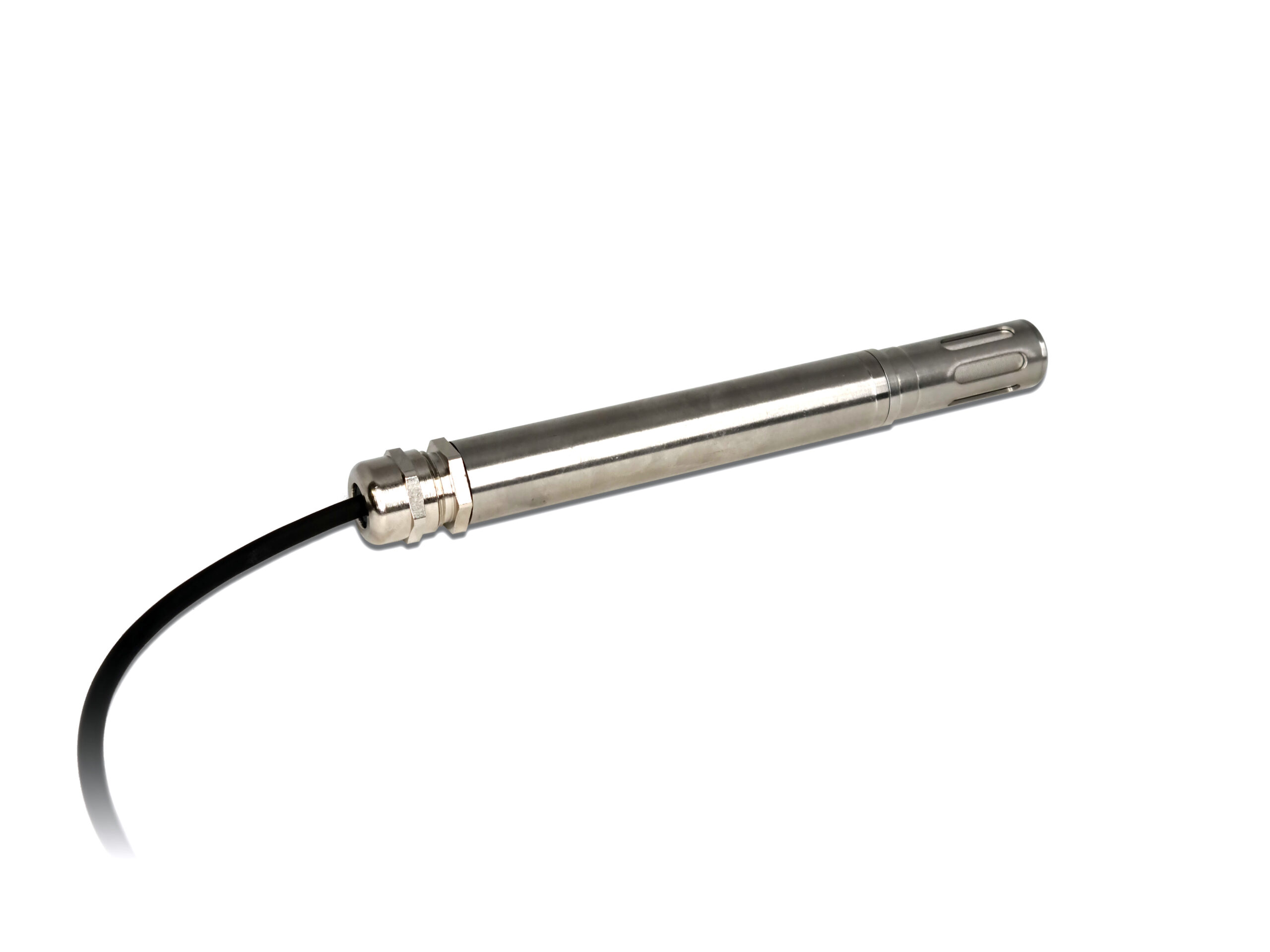
Resistive electrolytic RH/T sensors from Novasina provide an alternative technology to polymer-based sensors. For this type of sensor, humidity is tracked by the change in resistivity of an electrolyte solution. The advantage of this approach is that the sensor has a fast response time, does not become saturated at high humidity, and does not experience hysteresis during adsorption and desorption events. Consequently, the accuracy of the electrolytic sensors is 0.4% for relative humidity and 0.1K for temperature across the entire specified humidity and temperature range possible in a manufacturing facility, including at humidities higher than 85%. This accuracy is an order of magnitude better than can be achieved with polymer-based sensors and will result in much tighter humidity control in manufacturing facilities.
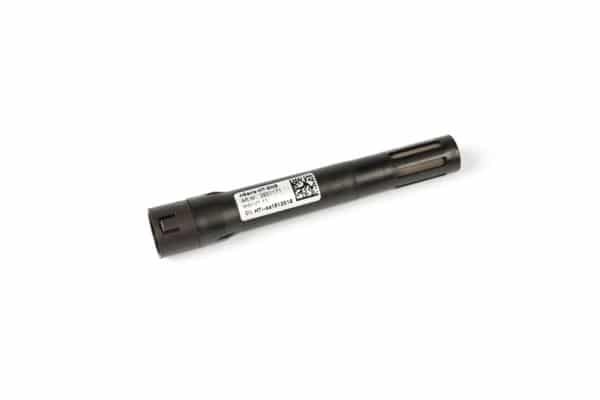
Many older manufacturing facilities are using outdated climate control systems that may operate from a single thermostat/humidistat with limited accuracy. With energy costs typically being one of the top 3 operating expenses, it behooves these companies to invest in better climate control, the savings from which will ultimately pay for the updates and provide further income. The key, but often overlooked component of an effective climate control system are the RH/T sensors feeding data to the system. Electrolytic RH/T sensors, with their unmatched accuracy and reliability, should be the sensor of choice to ensure climate control is delivering the maximum energy savings.
Our trained dealers can be found around the globe and will be happy to support you with your concerns.
Novasina AG, © 2021
| Cookie | Duration | Description |
|---|---|---|
| cookielawinfo-checkbox-analytics | 11 months | This cookie is set by GDPR Cookie Consent plugin. The cookie is used to store the user consent for the cookies in the category "Analytics". |
| cookielawinfo-checkbox-functional | 11 months | The cookie is set by GDPR cookie consent to record the user consent for the cookies in the category "Functional". |
| cookielawinfo-checkbox-necessary | 11 months | This cookie is set by GDPR Cookie Consent plugin. The cookies is used to store the user consent for the cookies in the category "Necessary". |
| cookielawinfo-checkbox-others | 11 months | This cookie is set by GDPR Cookie Consent plugin. The cookie is used to store the user consent for the cookies in the category "Other. |
| cookielawinfo-checkbox-performance | 11 months | This cookie is set by GDPR Cookie Consent plugin. The cookie is used to store the user consent for the cookies in the category "Performance". |
| viewed_cookie_policy | 11 months | The cookie is set by the GDPR Cookie Consent plugin and is used to store whether or not user has consented to the use of cookies. It does not store any personal data. |

This website and its content is provided by a company with commercial interests.
The responsible body in terms of data protection laws, in particular the EU General Data Protection Regulation (GDPR), is:
Novasina AG
Neuheimstrasse 12
CH-8853 Lachen
Telefon +41 55 642 67 67
Telefax +41 55 642 67 70
E-Mail info@novasina.ch
Internet http://www.novasina.com
When you access this website, information of a general nature is automatically collected. This information is collected in the server log file and includes the type of web browser, the operating system used, the domain name of your Internet service provider, your IP address and the like.
This is for the following reason:
Your data will not be used to draw conclusions about your person. Information of this kind is only evaluated statistically in order to optimize our website and the technology behind it.
The data is deleted as soon as it is no longer required for the purpose for which it was collected. This is generally the case for the data used to provide the website when the respective session has ended.
When you post a comment, it is saved indefinitely, including metadata. This way, we can automatically detect and approve follow-up comments instead of holding them in a moderation queue.
For users who register on our site, we also store the personal information they provide in their user profiles. All users can view, change, or delete their personal information at any time (the username cannot be changed). Administrators of the website can also view and modify this information.
When visitors post comments on the website, we collect the data displayed in the comment form, in addition to the visitor’s IP address and the user agent string (this identifies the browser) to help detect spam.
If you are a registered user and upload photos to this website, you should avoid uploading photos with an EXIF GPS location. Visitors to this website might download photos stored on this website and extract their location information.
The data you enter will be stored for the purpose of individual communication with you. For this purpose, it is necessary to provide a valid e-mail address and your name. This serves the assignment of the request and the subsequent response to the same. The specification of further data is optional.
When you write a comment on our website, this can be a consent to store your name, email address and website in cookies. This is a convenience feature so that when you write another comment, you do not have to enter all this data again. These cookies are stored for one year.
If you have an account and you log in to this website, we will set a temporary cookie to determine if your browser accepts cookies. This cookie does not contain any personally identifiable information and is discarded when you close your browser.
When you log in, we will set some cookies to store your login information and viewing options. Login cookies expire after two days and display options cookies expire after one year. If you select “Stay logged in” when you sign up, your login will be maintained for two weeks. When you log out of your account, the login cookies are deleted.
In order to display our content correctly and graphically appealing across browsers, we use “Google Web Fonts” from Google LLC (1600 Amphitheatre Parkway, Mountain View, CA 94043, USA; hereinafter “Google”) on this website to display fonts.
The privacy policy of the library operator Google can be found here: https://www.google.com/policies/privacy/
Posts on this website may contain embedded content (e.g. videos, images, articles, etc.). Embedded content from other websites behaves exactly as if the visitor had visited the other website.
These websites may collect information about you, use cookies, embed additional third-party tracking services, and record your interaction with this embedded content, including your interaction with the embedded content if you have an account and are logged into this website.
This website uses Google Analytics, a web analytics service provided by Google LLC, 1600 Amphitheatre Parkway, Mountain View, CA 94043 USA (hereinafter: “Google”). Google Analytics uses “cookies”, which are text files placed on your computer, to help the website analyze how users use the site. The information generated by the cookie about your use of this website is usually transmitted to a Google server in the USA and stored there. However, due to the activation of IP anonymization on these web pages, your IP address will be truncated beforehand by Google within member states of the European Union or in other contracting states of the Agreement on the European Economic Area. Only in exceptional cases will the full IP address be transmitted to a Google server in the USA and shortened there. On behalf of the operator of this website, Google will use this information for the purpose of evaluating your use of the website, compiling reports on website activity and providing other services relating to website activity and internet usage to the website operator. The IP address transmitted by your browser as part of Google Analytics will not be merged with other data from Google.
The purposes of data processing are to evaluate the use of the website and to compile reports on website activities. Based on the use of the website and the internet, other related services shall then be provided.
On this website we use the offer of Google Maps. Google Maps is operated by Google LLC, 1600 Amphitheatre Parkway, Mountain View, CA 94043, USA (hereinafter “Google”). This allows us to display interactive maps directly on the website and enables you to use the map function conveniently.
You can find more information about data processing by Google in the Google privacy policy. There you can also change your personal data protection settings in the data protection center.
If you have an account on this website or have posted comments, you may request an export of your personal data from us, including any data you have provided to us. In addition, you can request the deletion of all personal data that we have stored about you. This does not include data that we are required to retain for administrative, legal or security needs.
Visitor comments could be examined by an automated service for spam detection.
For data protection-related concerns, please contact the person(s) named in the imprint.
SSL encryption
To protect the security of your data during transmission, we use state-of-the-art encryption methods (e.g. SSL) via HTTPS
If you have any questions about data protection, please write us an e-mail or contact directly the responsible person in our organization listed for data protection at the beginning of the privacy policy.

 Neuheimstrasse 12